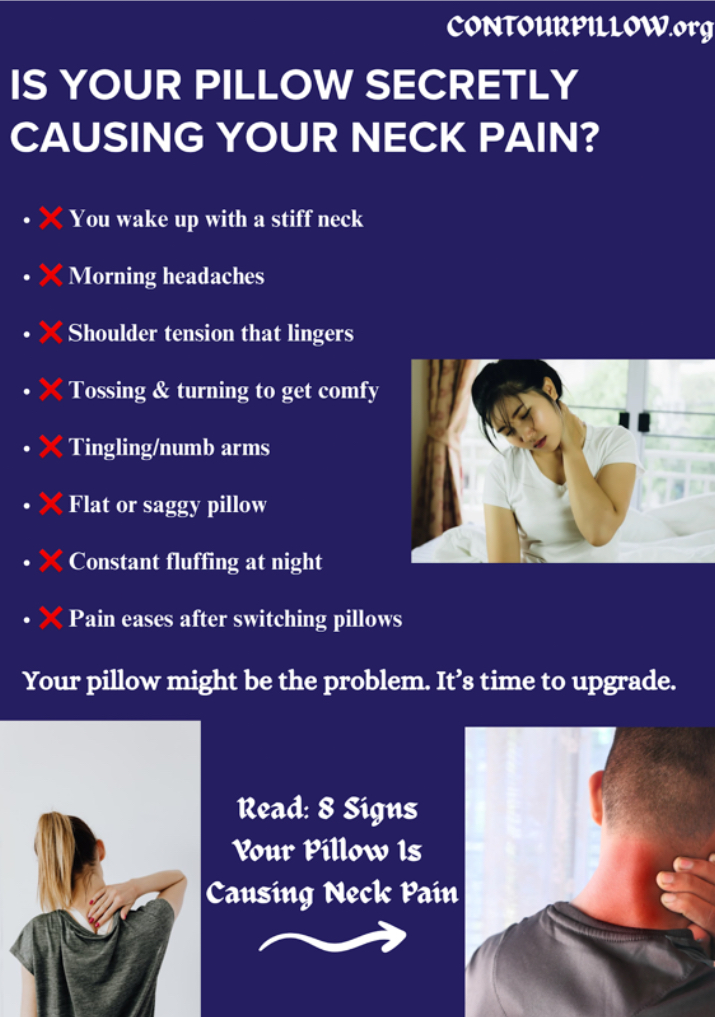
We don’t think about our pillows until they betray us. One morning you wake up with a stiff neck, shoulders that feel heavy, or a throbbing headache that makes the day start off all wrong. It’s easy to blame stress, long work hours, or even your mattress, but here’s a truth most people don’t realize: your pillow might be the real culprit.
The wrong pillow doesn’t just ruin your sleep; it slowly puts your spine out of alignment, strains muscles, and keeps you from getting the kind of rest that actually restores your body. If you’ve been wondering whether it’s time to retire that old pillow, here are 8 signs it’s not doing its job, and what you can do about it.
1. You Wake Up With Neck Stiffness or Pain
If your pillow isn’t supporting the natural curve of your neck, you’ll wake up feeling like you’ve been holding a weird position all night. Over time, this can even lead to chronic pain. It is usually advisable to switch to a pillow with contour support, like the coBIO Contour Pillow, which cradles the neck instead of flattening under pressure.
2. Your Pillow Looks Flat or Lumpy
A pillow that’s lost its shape won’t hold your head where it needs to be. Lumps create uneven pressure points, while flat pillows let your head sink too low. You can always choose a pillow with high-density memory foam that bounces back, like the CBD Pillow, designed to resist flattening.
3. You Toss and Turn All Night
Constantly flipping your pillow or adjusting positions? That’s a sign your pillow isn’t providing steady comfort. Good pillows let your body relax without the need for endless repositioning. Look for ergonomic pillows with dual loft options so you can find the perfect fit for your body.
4. Your Head Tilts Up or Down While Sleeping
For side sleepers especially, if your head is angled too high or too low compared to your shoulders, you’ll strain your neck muscles. The same goes for back sleepers with overly thick pillows. Check your pillow loft. Side sleepers often need high loft (5”+), while back sleepers do best with medium loft (3–5”).
5. You Wake Up With Headaches
Poor spinal alignment at night doesn’t just hurt your neck—it can also trigger tension headaches or migraines. If mornings often begin with head pain, your pillow may be the hidden cause. A contour pillow that evenly distributes pressure can relieve that strain.
6. Your Shoulders Feel Heavy or Sore
If your pillow is too low, your shoulders might be carrying weight they shouldn’t. Over time, this can cause tightness across your upper back. Choose a pillow with shoulder-supportive curves that allow your body to sink in naturally without scrunching up.
7. Your Pillow Makes You Overheat
Waking up sweaty and uncomfortable can worsen neck pain since heat and tension often go hand in hand. Traditional pillows trap heat, making matters worse. Go for pillows with cooling bamboo covers or ventilated memory foam (like coBIO’s).
8. Your Pillow Is More Than 2 Years Old
Pillows wear out faster than mattresses. Most lose their shape and support in about 18–24 months. An old pillow is basically guaranteed to be hurting your neck. Replace it with a pillow that’s designed to last, both the coBIO Contour Pillow and CBD Pillow are made from high-quality memory foam that stays supportive for years.
What to Do Next: Upgrade Your Sleep Setup
If you’ve noticed one (or more) of these signs, don’t ignore them. Neck pain is your body’s way of saying something’s wrong, and the solution might be as simple as changing your pillow.
Here are two pillows healthcare professionals and real users swear by:
coBIO Contour Pillow
- Dual-height design (choose your loft)
- Contour curve that supports both side & back sleepers
- Cooling bamboo cover, hypoallergenic & washable
- 100-night trial (risk-free)
👉 Shop the coBIO Contour Pillow
CBD Pillow
- Ergonomic arch to reduce shoulder and neck tension
- High-density memory foam that resists flattening
- Designed for deep, restorative sleep
- Customer satisfaction guarantee
FAQ: Pillows and Neck Pain
1. How do I know if my pillow is causing neck pain?
If you regularly wake up with stiffness, soreness, or headaches, chances are your pillow isn’t giving you proper support. Check if your pillow looks flat, lumpy, or older than 2 years, as those are red flags.
2. What type of pillow is best for side sleepers with neck pain?
Side sleepers usually need a higher-loft pillow (5”+) to keep the head level with the shoulders. A contour pillow with an ergonomic curve is ideal because it supports both the head and neck.
3. Can a bad pillow cause long-term problems?
Yes. Poor alignment over months or years can lead to chronic neck pain, tension headaches, and even spinal misalignment.
4. Should I use one pillow or two?
For most people, one supportive contour pillow is enough. Stacking pillows often pushes your head too high, creating more strain.
5. How often should I replace my pillow?
Experts recommend every 18–24 months. If you notice sagging, lumps, or persistent discomfort, it’s time to upgrade sooner.
Final Thoughts: Don’t Settle for Pain
Neck pain isn’t just “part of getting older” or something you should power through, it’s often a direct sign your pillow isn’t working for you. The right pillow will align your spine, relax your muscles, and help you wake up actually refreshed.
Your neck deserves better. And so does your sleep.
👉 Related Articles:
- The Best Pillow for Side Sleepers in 2025: Your Guide to Waking Up Pain-Free
- Best Pillows for Neck Pain and Side Sleepers in 2025 – Ultimate Buyer’s Guide
- How to Choose the Perfect Pillow For Neck & Back Support (2025 Guide)